Category: Uncategorized

  • Why Things Are the Way They Are

    Why Things Are the Way They Are

    In some Western countries like the United States and Argentina, newly elected leaders have stirred strong winds of change. Meanwhile, nations such as the UK, France, and Germany – along with Canada, increasingly aligned with Europe’s ideological outlook – continue to drift further down a globalist path marked by deindustrialization, expanding censorship, radicalized climate policy, and even the normalization of war rhetoric.

    In these countries, political parties that seek to fill the growing vacuum in the center are often ignored, sidelined, or misrepresented as far-right – with active support from parts of the mainstream media. At the same time, the boundaries of acceptable discourse are being redrawn, narrowing the Overton window to favor the dominant narrative. This has included the public shaming or political exclusion of individuals who, in the eyes of the establishment, express “wrong” opinions using “wrong” language.

    Examples abound. In Germany, politician Hans-Georg Maßen was labeled an extremist by domestic intelligence for suggesting that a post-COVID reckoning was necessary. In France, opposition leader Marine Le Pen – head of the country’s largest opposition party – was, at one point, stripped of her eligibility to run for office due to what many considered a relatively minor legal violation. In UK homes are raided and people imprisoned for critical social media posts. In Romania, the European Union intervened in an election process under controversial circumstances – raising concerns about whether the move was a political test case or a desperate reaction to prevent an unfavorable outcome.

    Across the board, freedom of speech has been an early casualty of these trends.

    Social cohesion has suffered accordingly. The COVID period created an initial split – between those who supported and those who questioned the measures, lockdowns, and vaccines. In the years since, new dividing lines have emerged: over Ukraine and Russia, over Israel and Gaza, over digital currencies, climate, and even the EU itself. Yet despite this wide range of issues, polarization remains largely binary. A person’s position on one issue now often predicts their stance on the others.

    Rather than fragmenting into a mosaic of small ideological camps people have consolidated into two increasingly incompatible blocs, making reconciliation appear less and less likely.

    Even more surprising, perhaps, is the role played by business leaders, corporate executives, and ultra-wealthy individuals. Once historically skeptical of socialism, many now align themselves with progressive narratives across these topics. What we are witnessing is the rise of a new alliance: between economic elites who pursue influence and profit, and ideological actors who frame their power through moral and social causes.

    Both groups operate from different motives – profit on one side, idealism (or the appearance of it) on the other – but they are not in conflict. In fact, they complement each other. The result is what some have called “billionaire’s socialism”: not socialism in the traditional sense of redistributing wealth downward, but a modern hybrid system where economic and political elites centralize control over both resources and behavior.

    As Michael Klonovsky aptly put it: “Socialism has become a parasite of capitalism.”

    This model reflects a deeper philosophical shift. The long-assumed antagonism between liberalism and socialism needs rethinking. Today, both ideologies rest on a shared materialist foundation and increasingly rely on the same instruments of control – administrative regulation, ideological conformity, and technocratic planning. This convergence results in a governance model similar to what Oswald Spengler described in The Decline of the West (1922): a late-civilizational structure characterized by mass bureaucracy, elite domination, and spiritual exhaustion. The modern version has been described – retrospectively – as “billionaire’s socialism.”

    Of course, today’s elites understand that the middle class won’t voluntarily surrender its autonomy or assets. That’s why the shift must be gradual and never framed as coercion. Instead, it’s driven by narratives, and perhaps the most effective of these is fear.

    Fear is a powerful instrument of control. Those who can credibly and consistently manufacture fear – be it of disease, climate, or war – gain enormous power over populations. Fear silences resistance, justifies exceptional measures, and sustains states of emergency.

    The COVID era revealed how easily populations can be shaped by centralized narratives. The resulting surge of authority – reaching even to low-level bureaucrats – proved politically intoxicating. When crises are no longer just exploited but coordinated between political and economic elites, new patterns emerge.

    From that perspective, several recent developments look less random:

    • A virus becomes the pretext for suspending civil liberties.
    • Climate change is reframed as a threat justifying surveillance, rationing, and control.
    • War returns as a unifying fear-narrative, evoked by leaders echoing rhetoric once used in darker eras.

    Even in Germany, the term “Kriegstüchtigkeit” (“war-readiness”), once associated with Joseph Goebbels, has re-entered liberal discourse – without irony.

    Why does it all feel like it’s accelerating?

    Because it is. And the reason lies not in secret coordination, but in structural incentives. The pandemic showed how easily a fearful population can be governed. At the same time, public morality has frayed. Political figures no longer step down over serious misconduct – and society no longer expects them to.

    This moral disintegration spreads quickly among the ruling class. In such a climate, the path to authoritarian governance – or to Spengler’s vision of “late civilization” dominated by technocrats and plutocrats – becomes not just shorter, but smoother.

    Crucially, this is no longer limited to individual countries. The COVID period triggered a synchronized transformation of state-society relations across much of the Western world. Only a few democracies – perhaps the United States and Argentina – have mounted partial resistance. In Europe, only nations like Slovakia and Hungary show signs of holding out. Within the EU system, however, meaningful course correction seems increasingly difficult.

    What may appear to be manipulation or conspiracy is better understood as emergent order: a convergence of incentives among elite actors, reinforced by fear-based compliance and moral posturing. It is not the result of a single plan – but the byproduct of many self-serving actors operating within the same system.

    But recognizing that structure is the first step toward change.

    Because with understanding comes agency – and with agency, the possibility of resistance.

    Not through panic. Not through tribal rage. But through awareness, disobedience, and the courage to call things by their real names.

  • Road to Serfdom – Approaching Final Destination

    Road to Serfdom – Approaching Final Destination

    In today’s world, societal and political changes are happening right before our eyes that will profoundly influence the lives of future generations: the shift from industrial society to information society, the realignment of the global world order, increasing supranational coordination, as observed already during the pandemic or in the context of the climate narrative.

    Amidst these changes, globally interconnected technocrats inclined towards the ideology of Social Darwinism have built an increasingly powerful, government-like position for themselves. In their worldview, socially, financially, or politically influential individuals (elites) are considered genetically superior, while the rest of society is viewed as “unfit.” Eugenics becomes the tool for implementation.

    With the book “Inquiries into Human Fertilities and its Development,” Francis Galton, the cousin of Charles Darwin, laid the foundation for eugenics. Eugenics comes from the Greek words “eu” – good and “genos” – race, family. In meaning, it is often translated as “good genes.” Eugenics sees physical and mental health, intelligence, social competence, and attractiveness as genetically determined and therefore heritable. Based on this premise, eugenics measures aim at both increasing the reproduction of individuals and races deemed to have positive hereditary traits, as well as preventing the reproduction of individuals and races deemed to have negative and undesirable traits.

    Eugenics became fashionable in the early 19th century, leading to the emergence of eugenics organizations in many places, such as the “Archiv für Rassen- und Gesellschaftsbiologie”2 , “Eugenic Education Society”3, “American Breeders Association”4, or the “American Birth Control League”5.

    After the end of World War I, eugenics gained increasing interest and was globally regarded as a science supported by many governments. Among the most prominent financial supporters were the Rockefeller Foundation, Carnegie Foundation, Macy Foundation, and McGovern Foundation. These are all foundations whose founders were protagonists of eugenics and adherents of Social Darwinism.

    In the 1920s, various states in the USA passed laws leading to forced sterilizations of approximately 100,000 people deemed unfit for reproduction. This laid the groundwork for the inhumane evolution of eugenics towards racial purity enforced by the Nazis in Germany. Nevertheless, the most important German eugenics organizations, especially the Kaiser Wilhelm Institute for Anthropology, Human Heredity, and Eugenics (later Max Planck Institute for Medical Research), where Josef Mengele worked, were consistently financially supported by the Rockefeller Foundation until 1947.

    After the horror of World War II and the revelation of crimes related to eugenics, most eugenicists hastened to distance themselves – at least from the depravity of the Nazis’ experiments.

    The majority of former eugenicists then joined the Neo-Malthusianism movement, which was not tainted by the atrocities of the Nazis. Neo-Malthusianism describes the ideology that the resource needs of the exponentially growing world population will eventually surpass the Earth’s only linearly increasing resource availability at some point, leading to global famines and societal collapses. According to this ideology, active population policies are necessary based on the principles of Social Darwinism. The name has changed, but the ideology remains the same.

    After World War II, Julian Huxley, who had previously served as secretary alongside John Maynard Keynes (!) and later president of the British Eugenics Society, played a central role. In addition to his passion for eugenics, he co-founded the “International Union for Conservation of Nature” in 1948, which later gave rise to the “World Wildlife Fund” (WWF) in 19616. Julian Huxley also coined the term “transhumanism” and founded UNESCO in 1946 as a subsidiary of the UN7, which he directed as Director-General from 1946 to 1948. He wrote in 1946:

    “It is to be expected that the indirect effect of present-day civilization is more dysgenic than eugenic and it is very likely that the dead weight of genetic stupidity, physical weakness, mental instability, and disease proneness, which already exist in the human species, will prove too great a burden for real progress to be achieved.”

    Huxley collaborated with the London Tavistock Clinic8, which was funded by the Rockefeller and Macy Foundations from the 1930s to the 1950s. Basic research was conducted there on soldiers traumatized in World War I, which later evolved into the infamous American program MK Ultra9.

    A colleague at the Tavistock Clinic and friend of Huxley’s was psychiatrist Brock Chrisholm, who also founded an organization affiliated with the UN: the World Health Organization (WHO). For the noble goal of promoting global mental and physical health, there could hardly have been a less suitable person10. Chrisholm advocated for erasing the “concept of right and wrong” and the “belief in the wisdom of the elderly” from people’s consciousness and said, even eight years after the WHO’s founding:

    “To achieve world government, it is necessary to erase individualism, loyalty to family tradition, national patriotism, and religious dogmas from the minds of men.”

    These insane thoughts of Chrisholm seem to be increasingly prevalent in society today. However, the WHO is just one of many organizations pursuing these goals. Implementing such transformative social and societal changes over decades requires an ideological, intergenerational doctrine shared, driven, and controlled by various interconnected centers of power.

    As the foundation with the highest investment and funding volume worldwide, the Bill & Melinda Gates Foundation can be considered such a power center. The foundation conducted research and experiments with injectable contraceptives in many developing countries, not without various scandals11. Supporters of these vaccination campaigns included the WHO, the UN Population Fund, the UN Development Programme, the World Bank, and the Rockefeller Foundation.

    Bill Gates Sr. was also a confessed eugenicist and Neo-Malthusianist12. He chaired Planned Parenthood and served as chairman of the board of the Bill & Melinda Gates Foundation until his death in 2018. Therefore, it should come as no surprise that the foundation continues to support Planned Parenthood with millions of dollars to this day. Planned Parenthood operates 650 abortion clinics in the USA and has been embroiled in a major scandal involving the delivery of body parts from aborted embryos on demand13. Planned Parenthood is considered the largest lobbying organization for abortion worldwide and is particularly strong on the EU level.

    Klaus Schwab’s World Economic Forum (WEF) is considered a platform for exchange and planning of the cabal for the technocrats. The WEF’s websites contain numerous documents openly describing the goals and means of reducing the world population. Neo-Malthusians cite a population cap of approximately 1 billion people. According to their ideology, a reduction requires a radically different world order, the “New World Order.”

    Although Neo-Malthusians have been spreading alarmism about population growth for decades, none of their apocalyptic predictions have come true in the last 70 years. Since World War II, the world population has grown from 3 billion people to approximately 8 billion today. Nevertheless, resource availability covers resource needs at least as well as it did 80 years ago.

    From the Neo-Malthusian perspective, new approaches, arguments, and measures were necessary. Conveniently, the UN created the IPCC14 to establish and spread the narrative of anthropogenic climate change caused by CO2.

    The greatest dogmatic proponents of anthropogenic climate change are the technocratic global elites. Because many measures aimed at reducing CO2 serve all too obviously as a pretext to artificially reduce resource availability. This is also reflected in the UN’s Agenda 2030, with which the WEF cooperates extensively. In this way, the Malthusian imbalance between resource demand and availability is to be created, in order to argue for a social Darwinist population policy as the only alternative.

    Now, birth control has long been the only tool of the neo-Malthusians. As recently as 2014, at the annual WEF meeting in Davos, Al Gore and Bill Gates proposed that global depopulation was a necessary means to stop climate change, with contraception being the key. The kinship with eugenics is unmistakable. As is the contemptuous attitude of Gore and Gates. However, these two “philanthropists” probably knew back then that contraception alone could not achieve the desired depopulation.

    It is all the more disturbing when these very individuals produce an inadequately tested, genetically altering vaccine and experiment with it on millions of people. It is also striking that it is especially the politicians indoctrinated by the WEF’s Young Global Leaders program, such as Macron, Baerbock, von der Leyen, and others, who attempt to shift the boundaries of normality as opinion leaders. Their views, such as rejecting diplomacy to end wars or advocating for the deliberate escalation of conflicts, are supposed to be seen as legitimate and socially acceptable positions.

    By 2015 at the latest, the appearance of the technocrats became increasingly manipulative. This may be related to scientific progress in genetics research. Neo-Malthusians saw many new opportunities in this. Through the decoding of the human genome and the initial successes of CRISPR15 technology, which allows targeted changes to individual DNA molecules, “climate-friendly eugenics” gained momentum.

    For example, Professor Matthew Liao of New York University proposed in Davos in 2016 to use genetic manipulation for climate protection, such as making people smaller so they consume less food. In addition, night vision capabilities should be improved so people consume less energy, or other discussed methods to create a population intolerant to meat, thereby reducing greenhouse gas emissions from livestock farming.

    It is also worth listening to Klaus Schwab’s chief strategist, Prof. Yuval Harari, who likes to express his social Darwinist attitude by referring to the majority of people as “animals” or “useless eaters” in his vision of the future.

    However, social Darwinism not only justifies the elimination of sick, disabled, or socially incompatible individuals, but also targets those who disagree with the prevailing political views. This is exactly what the methods of the “Great Reset” envisage, should they prevail.

    The goal has been the same for 100 years: the creation of a perfect human race – and ultimately the immortality of the elite. For this, the “unfit” will have to go. Through psyops and propaganda, the masses are to be convinced that eugenics, euthanasia, and mass murder are mandatory for the mental and physical health of people or for mitigating global warming.

    Will humanity intervene and prevent the extinction of its own species, or will it allow it? Time will tell.


    1 Social scientific theory stating that the principles of biological evolution proposed by Darwin can be applied to the social sphere.

    2 One of the central starting points for racial eugenics under the NSDAP.

    3 Until 2021 actually still called the Galton Institute, now Adelphi Genetic Forum – dedicated to ethical questions about human heredity and reproductive medicine.

    4 By Charles Davenport, arguably the best-known advocate of race-based eugenics and politically responsible for various forced sterilizations in the USA.

    5 By the now considered racist Margaret Sanger, now Planned Parenthood.

    6 By this means he became a pioneer for the symbiosis of nature, environmental protection and population control, thus bringing together resource conservation of the earth vs. resource consumption of overpopulation in the neo-Malthusian sense.

    7 The establishment of the UN was largely promoted by the Rockefeller Foundation and based to a large extent on organizational blueprints of the foundation.

    8 In recent years, the Tavistock Clinic has stood out worldwide for gender reassignment and is at the center of the scandal surrounding the promotion and lax handling of puberty-delaying hormone blockers for adolescents, which were banned in the UK in February 2024.

    9 MK Ultra was a secret research program led by the CIA on methods of mind control. The scientific investigations of torture methods used by the Nazis were further developed.

    10 The current WHO president and veterinarian Adhanom Ghebreyesus, a protege of Bill Gates who significantly finances the WHO, is accused of multiple human rights abuses and genocide in his previous position as a government official in Ethiopia. So it hasn’t gotten any better.

    11 Especially memorable is the distribution of tetanus vaccine by the foundation to millions of people in developing countries, which turned out to contain hCG (human chorionic gonadotropin), a substance used to induce infertility in women.

    12 Same is true for his son, Bill Gates Jr., who is an avowed eugenicist and neo-Malthusian, too.

    13 Including the use of corresponding abortion techniques, where the ordered organs are removed from the still living embryos in the uterus so they are not destroyed.

    14 IPCC (Intergovernmental Panel on Climate Change), another center of power, was established by the UN in 1988 as a sub-organization, with the statutory goal of “proving anthropogenic climate change”.

    15 A molecular biological procedure to cut a DNA strand at a predetermined location and to specifically modify it there. At the cutting site, individual DNA building blocks can be inserted, removed, or modified.

  • The Power of Volatility

    The Power of Volatility

    Please see footnote Nr. 1

    Volatility is to financial markets what the “Force” is to the world of Star Wars films. An invisible matter that permeates everything and connects everyone and everything2. For a long time, the concept of volatility was understood from a risk management perspective as the retrospective standard deviation σ\sigmaσ of asset returns. In contrast, tradable volatility as a financial product with its own second- and third-order derivatives is based on the market’s expected risk. Thus, volatility has evolved from a measure of market price risk to a measure of the market price of risk.

    Volatility and Stocks

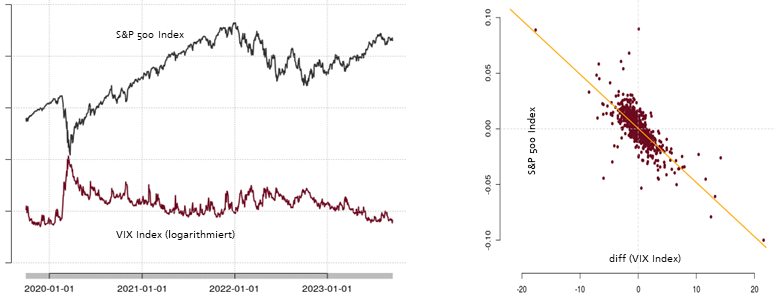
    Who isn’t familiar with the images of volatility shooting upward during market turmoil? The negative correlation between volatility and stocks, however, exists at all times. This dependency, known in the Anglo-Saxon world as “The Devil’s Correlation,” is illustrated in the following figures:

    To the left, the performance of the S&P 500 Index and the logarithmic development of the Volatility Index VIX from January 2020 to July 2023 are juxtaposed. The axis symmetry is immediately apparent. A regression of the two variables over the same period also shows a strong dependency, with a coefficient of determination R2=0.826R^2 = 0.826R2=0.826. In fact, the observation period does not matter; the R2R^2R2 always lies between 0.8 and 0.9.

    However, no statement can be made about the cause-and-effect direction of the Devil’s Correlation. In volatility, there is no correct or incorrect cause-and-effect relationship. Rather, various markets are kept in balance by volatility as a connecting element.

    For example, by purchasing a stock, an investor expresses their hope for rising prices and thus falling volatility. With the selection of strike and expiration dates, options traders bet on the volatility necessary for the hoped-for movement of the underlying asset, while the counterparty typically opens a similar position for hedging purposes. FX, bond, interest rate, or real estate markets also show, besides market-specific influencing factors, a dependency on volatility.

    Consequently, all financial market transactions can be reduced to a supply or demand for volatility. Following economic laws, volatility thus establishes itself as an equilibrium price.

    If one understands the dependence of volatility on supply and demand as well as the Devil’s Correlation axiomatically, it follows that every financial market transaction must affect the level of volatility, and thus also the price formation in all other financial markets. This is the decisive, cross-market, and connecting character of volatility.

    Opportunities and Risks of Volatility Derivatives

    The business with volatility derivatives, especially options, often serves to hedge securities portfolios. Due to the inverse correlation between volatility and market price, a hedging position can be built with corresponding call options on volatility.

    These calls act like insurance against falling stock prices. The buyer becomes the policyholder, and the seller becomes the insurance company (IC). The payout profiles are also similar to those of a line of business in an IC: market situations with exceptionally high volatility are relatively rare, like property damage. Most of the time, the calls on volatility expire worthless, and the insurer earns the premium. However, this is where the similarity with the insurance business ends. A key difference is that in an insurance contract, insured persons or objects are precisely named. This is not possible with options on volatility. In the case of property insurance, for example, the IC steps in when one of the insured houses has burned down. In contrast, with volatility calls, all insured objects metaphorically catch fire simultaneously.

    For a policyholder, hedging with options on volatility is interesting because of the potential payout profiles. For example, on Friday, February 21, 2020, just before the Corona Crash, the VIX was at 16.7 points, and the S&P 500 at 3,330 points. The market crashed the following Monday, February 24, 2020, by about 3.5% and lost about 27% of its value in the two weeks leading up to March 12, 2020 (and had not yet reached its low point). The VIX Index stood at 25 points on that Monday, February 24, 2020, rising by 60% in one trading day. On March 12, 2020, the index was at 76 points, another jump of over 200%. If one had bought just ten call options with a strike at 23 points at the beginning of 2020, at a price of about €1.50 each, the initial €1,500 investment would have turned into €60,000 in two weeks—a return of about 40,000%.

    Such market situations are rare. Nevertheless, many investors have aimed not only to hedge expected losses with volatility options in such cases but also to maintain a chance of additional returns. Thus, in 2021, hedging was partially shifted to volatility in many places.

    However, in 2022, many painfully realized that when the markets fell again by about 30%, hedging with volatility did not work this time.

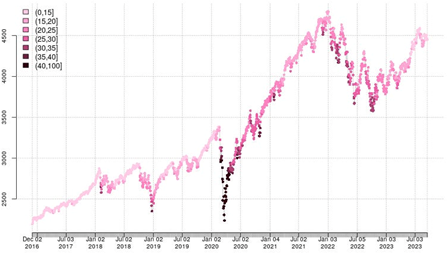
    The image above illustrates the reason for this: It shows the performance of the S&P 500 Index, with each day color-coded according to the level of the VIX. Although the market fell only slightly more sharply during the acute Corona crisis in February and March 2020 than later from January 2022 to October 2022, the Volatility Index VIX temporarily reached 60-70 points in 2020, while in 2022, it rarely rose above 30 points. The market decline in 2022 occurred so gradually that volatility was able to recover between phases of falling prices, meaning that the starting point for volatility was again at a low level for the next downtrend.

    This is probably one of the most significant disadvantages of hedging with volatility derivatives: Volatility does not depend on the absolute level of the market but is shaped by the relative change in the market per unit of time.

    This property is also reflected in the delta and gamma of volatility options. The delta, i.e., the change in the option price per change in the underlying (volatility), is currently around 0.2 for options that are about 10 points out of the money. At the money, the delta is about 0.8 and asymptotically approaches 1 in the money. So far, so normal.

    However, the gamma, which expresses the rate of change of delta, is sometimes 100 times higher for volatility options than for options in other asset classes. This is likely due to the relatively small “normal” range for volatility, which usually moves between 13 and 26 points but often makes larger jumps within this range. Volatility options can move deep in the money and out of the money within a short period.

    This gamma has some implications, especially for sellers of call options. Typically, option writers or market makers will hedge the short-volatility position created by selling call options and aim to be market-neutral again.

    For the hedging described above, such as a long-stock position, the demanded volatility options are usually initially out of the money. The market maker will, therefore, initially hedge only a small part of the options volume derived from the current option delta.

    When volatility rises, three things can work against them:

    1. With rising volatility, the market maker will adjust their hedge ratio and coverage. But because more or less everyone reacts simultaneously in this situation, there is a sudden surge in demand for volatility.
    2. Due to the relative connection between volatility and other markets, market-neutral cross-hedge approaches with other asset classes and systemic damping effects are complex. Today, volatility derivatives are almost always hedged with other volatility derivatives, mostly futures. However, this can bring the liquidity in the entire volatility market to its knees.
    3. The exponential nature of gamma, whereby the volume of hedges increases more and more with rising volatility, further accelerates the rise in volatility in such a market situation.

    Due to these three factors, the risk of a positive, self-reinforcing feedback loop increases massively. As soon as the execution of hedging transactions causes volatility to rise, triggering hedging mechanisms again, volatility and the derivatives associated with it spiral out of control. This scenario is also known as a gamma squeeze.

    Volmageddon

    A gamma squeeze occurs more often than one might think. Fortunately, many are less dramatic than anticipated.

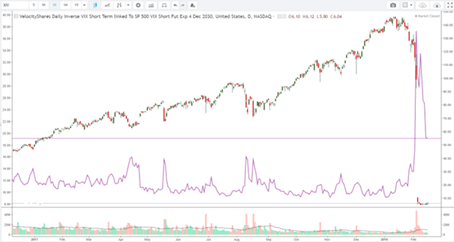
    An example of a dramatic gamma squeeze, even with a temporarily high systemic risk, was the so-called Volmageddon (sometimes also called Volapocalypse). On February 5, 2018, the VIX Index jumped from 17 to briefly 92 points within just 15 minutes for no apparent reason and later closed at 37 points, still 117% above the previous day’s close. Simultaneously, the rise in volatility caused the American stock indices Dow Jones to drop by 7% and the S&P 500 by 6%.

    A Credit Suisse ETN with the symbol XIV and an investment volume of approximately $1.9 billion is considered primarily responsible for this3, the world’s largest investment vehicle with a short-volatility strategy at that time. The XIV earned money by collecting option premiums from selling calls on volatility. In the event of rising volatility, losses were hedged by buying future contracts on the VIX. In the previous year, 2017, the XIV achieved a staggering return of over 200% due to continuously low volatility, which of course, also massively increased its volume.

    After two already difficult days for the XIV, the ETN was wiped out within less than an hour by a gamma squeeze on February 5, 2018. According to CS, the XIV’s hedging algorithm initially triggered smaller adjustments. The adverse dynamics unfolded when other market participants also reacted. There were massive purchases of future contracts on volatility, further fueling volatility. Within just a few minutes, the XIV’s algorithms detected additional hedging needs and again initiated the purchase of futures. Ultimately, Credit Suisse liquidated the ETN.

    The gamma squeeze also had a significant impact on the broader market. The Dow Jones and the S&P 500 recorded the highest intraday losses in recent history, both before and after February 5, 2018. Although these indices stabilized again, it remains unclear whether the Volmageddon could have had a worse outcome for other volatility derivatives and the market.

    Conclusion

    From a crisis management perspective, the financial markets can be divided into two groups: markets with a singular nature, such as equities or bonds, and markets with a systemic nature, such as volatility. As long as volatility is traded as a derivative of one or more primary markets, there are few concerns. The highly specific characteristics of volatility options are known, understood, and usually mitigated by market makers. The characteristics of gamma are also understood and, if possible, proactively managed.

    The situation becomes more problematic when the role of volatility is misunderstood as a market balancer or when too many products from other market segments (such as bonds, interest rates, or even real estate) are hedged using volatility. The probability of a positive feedback loop increases and, with it, the risk of a gamma squeeze.


    1 On Monday, August 5, 2024, the Japanese market fell by more than 10%. This also led to losses in Europe and the USA, although far less pronounced than in the Japanese Nikkei Index. However, the VIX recorded its historically largest increase on that day, rising from below 20 to over 70 points at times. European and American brokers and asset managers, including BlackRock and Vanguard, immediately reported problems executing trades for retail clients. This suggests that panic selling by retail clients, especially ETF sales, needed to be prevented in this manner, particularly because the escalating volatility posed risks to the financial system (see Gamma Squeeze). In light of these events, we have now also published the somewhat older article on the subject in English.

    2 With this definition of a universally connecting volatility, the increasingly common opinion is likely reflected that all consolidations, corrections, or crash situations in the stock market equally stem from an initial volatility shock. This, in turn, is caused by an external catalyst. For example, the Corona crash in 2020 would have been a result of a volatility shock triggered by concerns over a pandemic and simultaneously falling oil prices.

    3 It must be added that investigations by financial regulators later revealed that Credit Suisse might have benefited significantly from the collapse of XIV, which is why the accusation of deliberately exploiting the gamma squeeze is still being addressed by courts. Regardless, the example serves well to illustrate the scale of the chain reaction and the speed at which such a squeeze unfolds.

  • Is Corona mRNA’s Crown?

    Is Corona mRNA’s Crown?

    For several weeks, SARS-CoV-2 seems to be resurfacing. This time, it’s less due to the ongoing alarmist media coverage; instead, critical voices questioning the pandemic’s course are increasingly heard. Past authorities are being reminded of their borderline-fascist behavior, and propagandists are being held accountable for their exposed lies.

    One likely cause is the stronger societal backlash against socialist and woke experimental policies. Additionally, the leftist-green tactic of systematic defamation, denunciation, and exclusion is losing its deterrent effect, having been overused across various woke and ideological themes such as gendering, self-determination, racism, climate issues, and more.

    The majority affected by pandemic measures are turning emotionally and angrily against politics and media, which continue to evade responsibility and refuse to conduct a proper inquiry.

    Adding to the societal atmosphere, legal transparency deadlines are expiring, revealing previously unknown information from 2020 to 2022. This includes documents from American and European drug regulatory authorities (FDA, EMA), as well as German institutions like the Robert Koch Institute and the Paul Ehrlich Institute. Should it be confirmed elsewhere that, similar to the EMA, findings were concealed from the public due to political interests, severe political earthquakes may follow.

    Moreover, the deadlines for approval documents from vaccine manufacturers Pfizer, Moderna, and AstraZeneca are lapsing, gradually leading to the release of documents. This triggered numerous independent research projects globally, investigating manufacturer design decisions regarding their mRNA vaccines. The results of reputable researchers and institutes can no longer be easily dismissed or completely ignored, as much of the media, politics, celebrities, and others reflexively did since 2020.

    Another focus of research activities utilizes new insights to explain the observed excess mortality in almost all Western countries since April 2021. This, coupled with examining the long-term effects caused by vaccination (Post-Vac)1. We will now delve into the current state of understanding regarding the specific risks associated with mRNA vaccinations. At the end of this article, we will also provide you with a link where you can assess the risk level of individual batches and lot numbers of COVID vaccines.

    The EMA’s Approval

    Just last week, a small inquiry from Dutch EU parliamentarians to the EMA led to a surprising response. In it, the EMA admitted that COVID vaccines were never approved to reduce infections. Instead, vaccinated individuals might even have a higher likelihood of getting infected and transmitting the virus more easily. Additionally, the EMA anticipated more and more severe side effects shortly after vaccination.

    If this statement holds true, it would mean that European government vaccination campaigns were deliberately based on misinformation. Furthermore, governments justified not recording vaccine side effects by claiming that the substance needed 14 days to take effect. Instead, any complaints during this period were attributed not to the vaccine but to a COVID infection. This constitutes a deliberate endangerment of human life.

    Despite the EMA’s welcome new openness, questions arise about why the EMA remained silent for two years as everyone around them acted diametrically against their recommendations. And why is the EMA now starting the game of passing the buck?

    mRNA COVID Vaccinations

    Research on the vaccine itself increasingly suggests that the so-called vaccine spike could potentially be much more toxic than SARS-CoV-2 with its natural (or actually synthetic, created in Wuhan) spike proteins.

    Previous vaccinations were based on introducing a dead or significantly weakened pathogen into the human bloodstream. The immune system identifies the foreign body, learns its surface structure, and produces defense cells that specifically destroy the intruder. Since the dead or weakened virus cannot replicate in the meantime, a serious infection is usually prevented during vaccination. In the event of a subsequent real infection, the immune system is prepared and produces enough defense cells to eliminate the pathogen before it can spread.

    This differs with an mRNA vaccination: here, the vaccine contains the encoded blueprint of the pathogen. The body’s cells then undertake the production of the shell of the pathogen, in the case of SARS-CoV-2, the characteristic spike protein. After the cells produce this protein and release it into the bloodstream, the further course of immunization resembles the process described above.

    A successful mRNA vaccination must overcome significant hurdles:

    1. Administration: The mRNA must reach the cells of choice.

    To solve the issue of administration (1), the mRNA is packed into so-called lipid nanoparticles (LNPs). These LNPs encase the mRNA like a small droplet, protecting it on its journey to the destination where it delivers its cargo to a cell. These LNPs are specifically designed for vaccination and are often optimized for new production batches. Fine nuances of the electric charge of the LNPs determine the path of the particles through the body and the type of cells the LPNs can dock onto. The durability of the LNPs is crucial: if they are too unstable, they lose their cargo before reaching the destination. The then-free, negatively charged mRNA strands interact with the positively charged remnants of the LNP capsule, causing blood clots and increasing the risk of thrombosis and embolism. Too stable LNPs pose the danger of transporting the mRNA to distant body regions where it might be transferred to cells. It’s already known that LNPs tend to accumulate in the liver, certain brain regions, and, in women, the uterus.

    A vaccine dose contains about 250 to 500 million mRNA molecules. About 80% of these can be encapsulated by modern LNPs, while the rest enters the body without an LNP carrier, increasing the risk of blood clot formation for the same reasons as explained above. On average, a nanolipid particle carries around 6 mRNA molecules, but approximately 40% of the LPNs remain empty. An effective delivery rate of 50% of the transported mRNA to cells is considered good—put another way, even if everything goes well, half of the mRNA still ends up in the wrong place in the body.

    Given that it’s not yet clarified if or why various LNP variants are inherently toxic or trigger inflammations, the high percentage of empty LNPs also appears potentially problematic.

    2.i) Immunogenicity – Avoiding mRNA destruction by the innate immune response

    ii) Degradation: Reducing mRNA breakdown by ribonucleases (RNases).

    Immunogenicity and degradation are two interconnected problem areas that the manufacturers address together by substituting the nucleotide uridine in the mRNA.

    Nucleotides are the ladder rungs of the DNA double helix: they consist of either a connection of cytosine and guanine or adenine and uridine. Although the mRNA blueprint consists of only a single strand with half-steps, it essentially carries the same information content as a double helix. Since 1950, it’s been known that in nature, uridine is occasionally replaced by pseudouridine, contributing to RNA stabilization and reducing the immune response. However, despite its structural and building similarity to uridine, pseudouridine exhibits unpredictable behavior in protein production. Unlike uridine, which exclusively bonds with adenine, pseudouridine can bond with all other nucleotides—adenine, guanine, or cytosine. Achieving an exact replication of the virus’s spike protein becomes challenging with pseudouridine.

    Therefore, Pfizer has shifted to modifying mRNA with N1-Methylpseudouridine, discovered in 2012. Like uridine, N1-Methylpseudouridine exclusively bonds with adenine. Additionally, it not only stabilizes mRNA molecules but also demonstrates positive attributes in suppressing the innate immune response and in camouflaging the mRNA to protect against RNases. Furthermore, it’s been found to enhance the efficiency of cell protein production.

    N1-Methylpseudouridine is rarely found in nature. In a natural RNA, about 0.2-0.5% of uridine blocks are substituted by N1-Methylpseudouridine. Cells incorporate this stabilizing N1-Methylpseudouridine at selected, strategic points. The extent and subtleties of this process are as yet not understood, much like the fundamental biological role of N1-Methylpseudouridine. This nucleotide remains largely unexplored: the first scientific work on N1-Methylpseudouridine was only published in 2016!

    Therefore, it’s surprising that Pfizer and Moderna have decided to replace all uridine elements with N1-Methylpseudouridine in the mRNA manufacturing. This modified mRNA strand with 100% instead of 0.5% N1-Methylpseudouridine is unlike anything we know from nature. There’s no empirical data on its biological properties, such as extended spike protein production, durability, localization of the nucleotide in the body, toxicity, or carcinogenicity. Despite none of the above points being investigated, the FDA, as well as the EMA, approved the vaccines. They allowed hundreds of millions of people to be injected with and continue receiving an experimental substance.

    Also unknown are the consequences of reducing the innate immune defense caused by N1-Methylpseudouridine. This system, known to be fatal with even minor misdirections and causally involved in many serious illnesses.

    The suppression of the innate immune response has been showing initial problems in vaccine recipients for some time. Vaccinated individuals are demonstrably much less capable than unvaccinated individuals in producing sufficient interferons to maintain numerous downstream immune sequences protecting the body. This directly leads to a downregulation of critical systems like cancer surveillance or infection control.

    Contamination with Bacterial DNA

    Moreover, it has been proven that Pfizer’s vaccines are contaminated with the DNA of the bacteria involved in producing the mRNA strands during the vaccine manufacturing process. Since removing this DNA is laborious and costly, only the vaccine doses used within the approval process were purified. All others, depending on the production batch, remained contaminated to varying extents. In contaminated vaccines, this DNA, together with the mRNA, is transported by the LNPs to the cells and enters the cell interior in a similar way. Although the DNA fragments do not disrupt the production process of the spike protein, during cell division, they can sabotage the copying process of human DNA, with currently incalculable consequences for the natural cell renewal processes of the human body.

    In Vivo, Not In Vitro?

    At this point, a more fundamental question arises: previous medical uses of mRNA focused on diseases caused by malfunctions of the body’s own cells. Essentially, specific body cells needed to be induced with mRNA to produce the proteins they couldn’t produce or produce adequately due to an illness.

    In those cases, in vivo application of mRNA therapy was inevitable. However, the same doesn’t apply to producing a toxic and foreign spike protein. This could have been equally achieved in vitro without even requiring human cells. Wouldn’t immunization with spike proteins manufactured in the laboratory be equally effective? Or is it possible that after 30 years of mRNA research without a single approval, the primary goal of the pharmaceutical industry was to break the dam for further mRNA technology applications with a swift approval of the COVID vaccine?

    Toxicity of Vaccine Batches

    The extent of DNA contaminations varies greatly between individual production batches. Additionally, the type of LNPs used, compliance with cold chains, and general quality differences in vaccine production can influence the toxicity of a production batch.

    In this regard, a look at the Vaccine Adverse Event Reporting System (VAERS) operated by the American authorities, Centers for Disease Control and Prevention (CDC), and Food and Drug Administration (FDA) is worthwhile. It’s considered an early warning system for detecting potential vaccine safety issues and is the standard system for recording potential vaccine side effects for healthcare professionals in the US and Europe.

    Batch numbers are recorded there, but unfortunately, manufacturers do not disclose their batch sizes. Therefore, the number of reports (deaths, hospitalizations, etc.) doesn’t allow conclusions to be drawn about the absolute danger of the batch. Only comparing the number of critical side effects to the total number of reports per batch can provide clues to problems.

    It should be noted that VAERS is an open system that anyone can use. This openness can lead to misuse and, for example, interest-driven false entries, which can also distort individual evaluations. Hence, sometimes, criticism is leveled against using VAERS-based evaluations, especially in spreading misinformation.

    Nevertheless, on 18th November 2022, the EU requested the CDC, the operator, to delete over 500,000 suspected cases of COVID vaccine side effects recorded in Europe. Due to deletion, some batch numbers have completely disappeared from the system, and for others, the assessment according to the aforementioned criteria has massively improved. An official explanation for the deletion request is not known. However, it doesn’t seem to be a measure against misinformation.

    Original Data for Testing the Toxicity of Your Batch

    We have the database status from 12th November 2022, a week before the EU-initiated deletion, available in our systems. Using the link below, you can test the quality of the batches based on the complete database. You can send us your batch number and we will compile and send the relevant information to you.

    Disclaimer / Conflict of Interest:

    The authors hold a short position in an mRNA vaccine manufacturer. The authors will continue to trade securities of this issuer and will be directly and/or indirectly invested in securities such as stocks (and/or options, swaps, and other derivative securities relating to the stock) and bonds. The commitment can be long, short, or neutral at any time, regardless of an opinion presented here.

  • The Poisoned Apple of Philantropy

    The Poisoned Apple of Philantropy

    The affair involving Robert Habeck’s best man and former head of the Agora Think Tank, Patrick Graichen, the state funding of the “united4Rescue” search and rescue organization, whose leader is revealed to be the life partner of Bundestag Vice President Katrin Göring-Eckard, the Open Society Foundation’s continued support for 13 organizations classified as terrorist by Israel even after October 7, 2023 – reports of problematic entanglements of non-profit organizations are accumulating.

    NGOs and think tanks attempt to influence the democratically legitimized parliamentary political process in favor of their represented interests, acting as lobbyists for their own cause, so to speak. They derive the right to have a say primarily from the support they receive, especially in terms of contributions received. However, the majority of these incoming funds come from state and philanthropic sources. Since NGOs do not bite the hand that feeds them, their positions primarily align with those of their funders. Consequently, they often do not represent the interests of a significant portion of the democratic society but those of the political class.

    In other words, government agencies pay NGOs with taxpayers’ money to provide them with argumentative support as supposedly independent third parties. In such a system, there is no need to wonder about nepotism and biased assessments.

    The Mercator Foundation from Essen is particularly active in this area. With the Agora Think Tanks (Energy Transition, Transport Transition), the Mercator Research Institute on Global Commons and Climate Change (MCC), the Potsdam Institute for Climate Impact Research (PIK), and the Clean Energy Wire-operated website klimafakten.de for the dissemination of false information, they support NGOs that all engage in politically aligned preliminary work. Shady actors in this context include Patrick Graichen (Agora), Ottmar Edenhofer (MCC, PIK), Stefan Rahmstorf (PIK), or Hans Joachim Schellnhuber (PIK, Merkel Advisor).

    The Mercator Foundation hypocritically claims to want to strengthen democracy. According to their own information, in 2022, they funded over 1,000 projects from approximately 600 NGOs with a total volume of over 67 million EUR. They receive their funds from the affiliated Meridian Foundation based in Zurich. It is clear that the funding volume is not generated from capital gains from the initial capital of 58 million EUR but comes from external contributions. The Meridian/Mercator Foundation complex remains silent on who exactly contributes the additional funds of around 80 million EUR (including administrative costs). There is no legal obligation for charitable foundations to disclose the sources of their funding.

    Given the volume of undisclosed contributions, it can be assumed that the donors are philanthropic foundations. These are organizations that generate their funding exclusively through tax-free investment of their endowments in financial markets.

    Estimates suggest that the funding volume of the 20 largest philanthropic foundations, primarily located in the USA and the UK, is approximately 25-30 billion USD. The largest among them is the Bill & Melinda Gates Foundation (BMGF), with other examples including the Oak Foundation (OAK) and the Children’s Investment Fund Foundation (CIFF).

    Behind these foundations are the wealthiest individuals in the world. They have become rich through globally operating corporations and advocate for open borders, free flows of capital and goods, and global labor markets. While this may sound pleasant at first, it is essentially a neo-capitalist desire to eliminate all forms of regulation.

    An example of how philanthropic foundations promote their own interests, which do not necessarily align with their public statements, is the financial support of the WHO. This UN-affiliated organization is currently attempting to gain extensive powers over around 170 member states and national parliaments through the so-called Pandemic Accord. Previously, the WHO had only played an advisory role toward its members. By signing the new Pandemic Accord, states would commit to implementing all of the WHO’s guidelines regarding vaccines and strategies, hospital resources, measures for contact restriction, and lockdowns during a pandemic.

    It is already concerning that a democratically unlegitimized organization might receive such powers. What is even more alarming is the fact that the WHO has been financially supported by the BMGF for years. In fact, the BMGF is the second-largest contributor to the WHO after the United States. In light of this financial dependency, national competencies could just as easily be transferred to the BMGF. In other words, to a private foundation known for its pronounced focus on pharmaceuticals and transhumanism?

    This is the same foundation that advocated for widespread and mandatory vaccinations during the pandemic and, at the same time, was the largest single investor in BioNTech from 2019 to 2021 (multiplying an initial investment of 18 million EUR to 400 million EUR within two years). The foundation that supports tests of unapproved injectable contraceptives in developing countries and has recently come under scrutiny for the large-scale release of genetically modified mosquitoes.

    In any case, overarching philanthropic goals, such as the example of the BMGF gaining power over the WHO, require a broad, transnational consensus among the affected political decision-makers as a prerequisite. For this reason, philanthropic foundations allocate the majority of their budgets to support a variety of smaller NGOs. These organizations act as lobbying groups and influence political opinion formation at various government levels through their projects. Simultaneously, they help pave the way for overarching goals.

    In an alliance between philanthropic globalists and governments, wealthy and politically influential do-gooders team up with left-leaning do-gooders, both of whom want to take control of the planet’s fate. However, they operate from different motivations: some want to make a profit, while others want to feel good.

    Strangely enough, the business interests of one group align well with the ideological motives of the other. Actually, this complementarity might only appear strange if one understands socialism as the creation of wealth through expropriation and redistribution of capital. Is socialism, at least as empirically observed, not more of an approach to centralize and control wealth among a few elites? Then socialism would not be the uprising of the proletariat but rather a transformation driven by economic elites. As writer Michael Klonowsky put it: socialism becomes a parasite on capitalism.

    In reality, the assumption that liberalism and socialism are always antagonistic is open to discussion. In today’s political landscape, the differences are hardly discernible. Perhaps the newfound proximity between the two ideologies is due to the fact that they ultimately share the same materialistic worldview of the world and humanity. In that case, it is not surprising that they can merge despite superficial contradictions and find a point of balance where they become one.

    This combination of the forces of capitalism and socialism creates a societal order that closely resembles the “billionaire socialism” predicted by Oswald Spengler in many aspects. A central element is the elimination of the middle class. What remains, as described by philosopher and historian David Engels, is, on one side (liberal), an unimaginably rich elite that controls governments and media through its financial resources and systemic relevance. On the other side (socialist), there is a impoverished and disenfranchised population kept content through bread and circuses, political indoctrination, ethnic-cultural fragmentation, and, not least, through fear of terrorism or pandemics, which diminishes their sense of solidarity and resistance.

    The elites can carry out their businesses more freely and without ethical standards other than the pursuit of success. They view the political state as their agent, which they can instruct in all matters, from legislation to warfare, as they please.

    Towards the public, the elites present themselves as benevolent and caring, one might even say philanthropic, or better yet, “woke.” They know that their philanthropic donations will ultimately increase their wealth. At the same time, they hope that the billions spent for (supposedly) good purposes will make people forget how they earned the money in the first place. Above all, they are immune to anti-capitalist criticisms when dressed in the garb of moral superiority.

    In November 2016, the World Economic Forum (WEF), itself a foundation and NGO, published an ideological future scenario for a better world that far surpasses the Orwellian dystopian potential of the aforementioned societal order. The WEF describes the ideal society of 2030 as one in which private property is abolished, goods and services are distributed in a sharing economy, and citizens are under constant surveillance.

    The consistent development of this future scenario led to the WEF’s “Great Reset” initiative launched in June 2020. Just a few months later, in July 2020—only four months after the pandemic began—Klaus Schwab and Thierry Malleret published the book “Covid-19: The Great Reset,” detailing the desired future societal order. The publicly available documents on the WEF’s website describe “Global Governance” as a strategic goal. This concept implies a form of rule by elites that goes beyond the democratic authority of nation-states to advance globalization, with the hypocritical argument that only “Global Governance” can solve global problems like climate change, racism, war, social injustice, and so on. However, it does not openly acknowledge that achieving “Global Governance” entails gradually disempowering national parliaments and dissolving national cultures.

    The stated intentions for implementing a fundamental economic and socio-political transformation can only be understood as a draft of a new post-democratic world order led by an empowered and opaque group.

    Among the implementation measures, the WEF’s Global Young Leaders Program plays a crucial role. The program aims to promote and connect the global elite of the future, or as Klaus Schwab puts it, “We penetrate the cabinets.” Among its 1,400 members are names like Angela Merkel, Tony Blair, Justin Trudeau, Annalena Baerbrock, or Vladimir Putin. This is another way to influence politics. Incidentally, the Global Young Leaders Program is also an NGO.

    A closer examination of the topic and the above analysis inevitably raise the question of whether the world is already on the path to the new societal order. What do you think, are we truly on our way to the “Great Reset”?”

  • This time is different or is it?

    This time is different or is it?

    The recession is the bogeyman of capitalism. Businesses and private households fear loss of prosperity and potentially existential impacts; the state faces economic and societal instability; and governments worry about their re-election prospects amid increasing citizen dissatisfaction. Everything is done to avoid or at least mitigate a recession.

    However, the fear of recession displaces its quite meaningful role as part of the economic cycle from the consciousness of many people. The economic downturn compels companies to be resource-efficient in order to survive during times of low demand. Many companies fail and disappear from the market. Following the spirit of Schumpeterian creative destruction, this creates space for new companies and innovations, which in turn lay the foundation for growth and prosperity in the next economic cycle.

    The current economic cycle began with the upswing after the great financial crisis in 2009. Since then, governments and central banks have been moderately successful in stifling potential recession risks with cheap central bank money and state subsidies, keeping the economy running.

    However, this causes the entire economic cycle to remain in an unnatural prolonged boom phase for more than a decade, during which constructive market adjustments and innovations have largely been absent.

    Yet, the more forcefully and extensively monetary and fiscal measures intervene in the economic cycle, the more painful the inevitably following recession will be. This increases the fear of recessions, which in turn leads to even more massive interventions.

    This vicious cycle manifests with various symptoms, including high inflation, an increase in state subsidies and “too-big-to-fail” company bailouts, a growing societal gap between the rich and the poor, bubbles forming in asset classes, and the monopolization of companies.

    The latter is due to the fact that large corporations particularly benefit from delaying the recession. Given the constant subsidized demand, they do not need to continually improve their products and processes and face minimal pressure to develop and implement innovations. In short, they need to invest less in securing their competitiveness and can dedicate more time to expanding their market power. In such a market environment, fewer and larger corporations increasingly dominate the market proceedings.

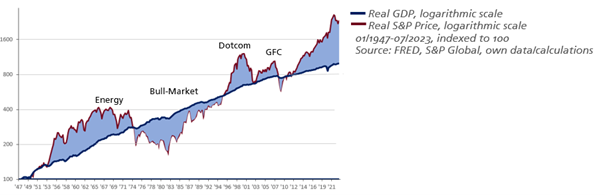
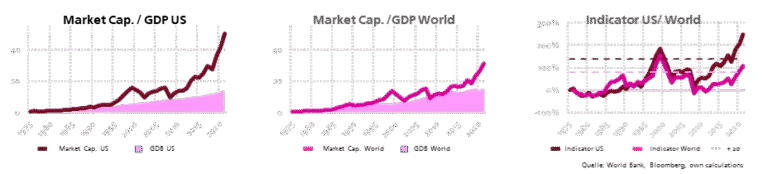
    Monopolization and the formation of bubbles are also evident in excessive valuation levels of companies. This is illustrated by the above chart, which juxtaposes the development of the Gross Domestic Product (GDP) against the capitalization of the S&P 500 Index for the United States since 1947.

    In most cases, major crises have been preceded by stock market growth that was disproportionately strong compared to economic performance. However, never in history has the S&P 500 Index become so disconnected from the GDP as it is today. Just to return to GDP levels, the index would need to correct from its current level of around 4,500 points to about 1,900 points. It is likely to descend even further, especially if corporate valuations initially overshoot in the opposite direction when normalizing. Since market excesses are never worked off sideways (and GDP can hardly catch up), the return to normalcy is likely to be accompanied by rapid declines in stock prices.

    In June, The Wall Street Journal published an analysis of economic cycles since 1889. Interestingly, the lead-up to the stock market crash of 1929 and the subsequent “Great Depression” bear striking similarities to the current situation. From 1921 to 1929, there was a period of extremely low interest rates and cheap central bank money – the Fed increased the money supply by over 60% in eight years (2009-2023: 110%). This led to rapidly rising stock prices and rampant stock market euphoria. During that period, the Dow Jones Index increased by 500% (S&P 2009-2023: 300%).

    Subsequently, the collapse in October 1929 marked the beginning of the most severe and prolonged global recession in history. While the unemployment rate in the United States was only 3.5% in mid-1929, it had already surpassed 25% just two years later, even higher in many other countries. The Dow Jones lost 90% of its value and took more than 15 years to recover. The worldwide economic and social upheavals led to massive geopolitical and political changes. In Germany, in combination with the preceding hyperinflation resulting from reparations payments under the Treaty of Versailles, the “Great Depression” laid the groundwork for the rise of the National Socialists and thus significantly contributed to the outbreak of World War II.

    So, is today’s fear of a global recession justified, or does the phrase “This time is different” hold true after nearly 100 years?

  • Further Down The Road (To Serfdom) 

    Further Down The Road (To Serfdom) 

    It is no coincidence that the influential works of the great political philosophers of classical liberalism, such as Friedrich August von Hayek, Karl Popper, or Ludwig von Mises, emerged between the years 1935 and 1960. During that time, the political landscape of Europe was dominated, on the one hand, by totalitarian and inhumane ideologies like communism under Lenin and later Stalin, and on the other hand, by the dictatorship of National Socialism under Hitler. Additionally, there was the Soviet-influenced socialism in the former German Democratic Republic (East Germany).

    Considering the experiences with this alternative and oppressive nature of societies, the Austrian School developed the position that individual freedom is an indispensable necessity for modern societies. Hayek convincingly argued, and his argument remains unrefuted to this day, that socialism inevitably leads to totalitarianism. The Austrian School, as the origin of modern liberalism, has influenced not only philosophers and economists like John Maynard Keynes or Milton Friedman but also contributed to the core principles of many European countries’ constitutions. In particular, principles such as the limitation of power between the branches of government through checks and balances, the guarantee of freedom for every individual citizen, protection against government encroachments, and the right to property were incorporated.

    The Maastricht Treaty, which can be considered the founding document of the European Community as we know it today, was also concluded in this spirit. However, the subsequent formal constitution adopted by the community could only be passed as a compromise due to differing political interests of the member states. With the Treaty of Lisbon (2007), certain limitations on powers for European institutions, the principle of subsidiarity, and especially the competence of sovereign states—the decision on which policy areas are transferred to the EU—were weakened.

    It should come as no surprise that the centralized authorities of the EU would seek more power and size. It is well known that any organization, be it economic or political, has a drive for growth, similar to the reproductive drive of living beings. In several previous articles, we have therefore warned against the EU’s efforts to transform the European community of states into a centrally controlled socialist form of government. About a year and a half later, the communications, measures, and legislative proposals of the EU demonstrate that our warnings were not exaggerated. On the contrary, the speed of transformation exceeds our greatest fears.

    The ongoing transformation follows the same steps known from revolutionary socialist transformations in other countries in the past:

    I. The Ideology

    For the transformation, a fundamental promise of salvation and a narrative supported by a large part of the population, seen as necessary for change, are needed. A cadre of followers who have internalized the ideology is responsible for spreading the message and for the corresponding (re-)education of the population. The second element of the ideology is to create an atmosphere of fear to suppress divergent opinions.

    Europe has chosen the fight against climate change as its central ideology. This is a brilliant move as it simplifies a grand and noble goal to which everything else can be subordinate—even freedom and democracy, if necessary. And it is ideal that this ideology also generates fear among the population, which can be effectively used to portray dissenters as enemies of their own lives and well-being and silence them. Instead of imprisonment and execution of regime critics, personal defamation, exclusion, and even “social death” have taken their place.

    II. Surveillance and Control

    In parallel, the EU provides the infrastructure for manipulating and censoring public opinion and monitoring citizens through the Digital Services Act (DSA). Regulatory measures include the regulation of political party advertising, cash limits, the establishment of a European asset register, or the establishment of the Anti-Money Laundering Authority (AMLA).

    It is also helpful to divide the already divided society into as many individual identity groups as possible, creating disputes among them. This ensures that broad societal alliances do not form, which could collectively reach a critical mass and resist the socialist transformation.

    III. Elimination of the Middle Class

    In the transition to socialism, states break away from former bourgeois structures and create a socialist social structure. All forms of socialist rule have a society without a significant middle class. It is characterized by the classical masses of the working population facing a comparatively small socialist elite.

    In addition, private capital, especially real estate and businesses, must be brought under state control. This somewhat challenging step was accomplished by Stalin through straightforward expropriation, while in Nazi Germany, the state controlled the economy through price and wage controls. In Europe today, a new, subtler form is available. The EU, through regulation and laws, drives up the costs of private capital to such an extent that more and more people can no longer afford ownership and are forced to sell. However, the buyer is rarely the state; instead, it is an oligarchic circle of wealthy investors closely connected to politics.

    As an example beyond Europe, let’s mention Bill Gates: the founder of Microsoft, a friend of Epstein, and a close collaborator of Klaus Schwab. He has acquired agricultural land from many struggling farms, making him the largest private landowner in the United States with around 120,000 hectares.

    Another perplexing example is TCI, a global real estate hedge fund that is a major sponsor of the foundations behind Agora and other climate activist NGOs. It is hard to believe that multi-million-dollar donations were made without any economic interest.

    Sometimes this system is also referred to as “billionaire socialism,” a term coined by Oswald Spengler. It refers to the alliance between the socialist power elite and the economic elite that emerged in capitalism. In this small group, political power and economic capital increasingly merge. A current example is Thierry Breton, the current EU Commissioner for the Internal Market, who previously served as the CEO of the French IT service provider Atos Origin. As an EU politician, he ensures that his former employer receives contracts worth 300 million euros as part of the infrastructure development for the DSA and the asset register.

    IV. Economic Planning

    In this form of socialism, where private capital does not directly belong to the state, the necessary economic planning must be implemented indirectly. The EU openly reveals its intention to achieve centralized control of capital flows through several delegated regulations. The foundation for this is established through regulations related to ESG (Environmental, Social, and Governance) issues, which align perfectly with the ideology.

    Companies are obligated to report comprehensively on their carbon footprint and the implementation of stakeholder-value measures. On the other hand, banks, institutional investors, and asset managers are forced, through regulatory requirements, to make investment decisions based on these indicators. Consequently, capital is directed towards companies that align with the underlying EU socialist ideology, while others are largely cut off from the capital market. In return, the EU promises financial institutions an increasing demand for ESG products accompanying the spread of their ideology. This is why it is difficult to find asset managers today who oppose this system that has given rise to an entire industry but significantly harms investors and the economy in various ways.

    Please do not misunderstand us; we do not believe in a conspiracy or that there is a master plan for this transformation. Rather, the climate panic that has been fueled by politics and parts of the scientific community for years, interrupted only briefly by an even larger regime of fear during the pandemic, has led to widespread irrationality, where questioning the narratives and being open to alternative arguments have been lost. Many people have now learned to accept ideologies and prefer to use them for their own interests rather than question them. The more harmless ones stick posters on streets to push a political agenda, while the more dangerous ones, like Hans-Joachim Schellnhuber, demand a personal carbon budget and the technical means to fully monitor each individual’s consumption. Moreover, many people’s prosperity already depends on the preservation of the ideology, such as the huge portion of the financial services market that has emerged and grown with the ESG theme. Therefore, the idea of socialist transformation is supported by a significant portion of the population.

    This gives little hope that the EU’s chosen path can be politically stopped. Even during the pandemic, undemocratic and unconstitutional measures could not be prevented for a long time. It was only when more and more information about the virus and vaccines became known that alarmists like Karl Lauterbach or Christian Drosten, whose interest was always to prolong the pandemic and thereby maintain their power, rapidly lost credibility and support. The same will happen with the climate ideology: Once a genuine, broad scientific discourse emerges instead of biased studies from institutions like the Potsdam Institute or politically biased IPCC climate reports, people will realize that climate change is not as unidimensional as it is often presented today.

    However, until that happens, undoubtedly everything will be done to avoid such a public discussion. Because when it takes place, the climate ideology will collapse, taking the associated socialist transformation down with it.

  • The War for Energy Resources in the Black Sea

    The War for Energy Resources in the Black Sea

    There are different explanations for Russia’s motive to attack Ukraine. One crucial aspect is often overlooked or underestimated: Russia’s interest in the significant resource wealth of Ukraine, particularly the enormous untapped natural gas reserves in the Black Sea.

    In 2012, a first, smaller natural gas field was discovered in the Black Sea off the Romanian coast during test drilling. Since then, significant quantities of oil and gas have been found in the coastal areas of the neighboring countries (Turkey, Bulgaria, Romania, Ukraine, Russia, and Georgia), and large international investments have been made to exploit them. Estimates suggest that the Black Sea holds about 30,000 billion cubic meters of natural gas alone, which is roughly ten times the annual global consumption.

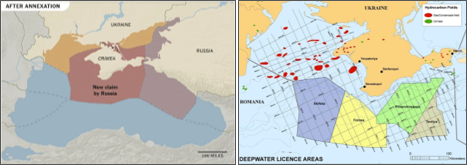
    However, the test drilling for the corresponding development projects initiated by Ukraine in 2013 was interrupted by Russia’s annexation of the Crimean Peninsula, which is not internationally recognized. Since then, Russia has claimed not only the territorial waters belonging to Crimea but also large parts of the maritime territory belonging to Ukraine under the law of the sea. All the technologically advanced drilling platforms that had been erected for test drilling were militarily occupied. The maps illustrate the extent of the sea area controlled by Moscow since then (left) and the gas explorations annexed by Russia (right).

    Before the war in Ukraine, Russian energy exports accounted for about 45% of the country’s gross domestic product. Now, the share is likely to be even higher due to Western sanctions and record prices for gas and oil.

    In the past, there have been disputes between Russia and other countries over access to oil and gas or the control and distribution of energy to Europe. Russia has waged the so-called “Kremlin pipeline wars” with Belarus (2004), Georgia and Lithuania (2006), Turkmenistan (2009), and Syria (2015), among others. Putin wants to avoid at all costs that oil and energy pass Russia by and reach the European market. Not only because it would reduce Russia’s market share but also because it would make the importing countries more independent, resulting in painful power and economic losses in Europe. However, the Kremlin is also aware that the loss of the European energy market could be more than compensated for by demand from China and, especially, India.

    With the resources found in the Black Sea, Ukraine has the largest European energy reserves after Russia. Estimates put Ukraine’s share of the Black Sea’s natural gas reserves at 5,000 billion cubic meters.

    A look at the current course of the war supports the suspicion that Putin is primarily interested in Ukrainian resources: Mariupol, the major port city on the eastern Ukrainian coast of the Sea of Azov, was one of the first targets of the Russian army. At the same time, the fighting has shifted from the center of Ukraine to the south of the country along the western coast, as far as Odessa, where an increasing number of Russian air strikes are also being observed.

    It is also clear that Russia was never seriously interested in capturing the capital and toppling the government in Kiev. The rocket attacks on Kiev and other cities in the center and west of Ukraine subsided after the first few days of the war and were possibly only diversionary maneuvers to conceal Russia’s true goals in this war.

    For a few days now, Putin has been preparing his war rhetoric for the possibility of an eventual partition of Ukraine into regions as a solution to the conflict. He is surely not only thinking of Luhansk and Donetsk and their extensive grain and other natural resource deposits but also of the separation of the entire Ukrainian Black Sea coast. In addition, the sale of the resulting territories could bring significant income to Russia.

  • The Art of ECB’s Monetary Policy

    The Art of ECB’s Monetary Policy

    Federal Reserve Chairman Jerome Powell believes it’s time to retire the term “temporary inflation” and is compelled to undertake a monetary policy shift with the Fed. Among the leading global central banks only the ECB still adheres to the narrative that inflation would disappear on its own in 2022 . Is Mrs. Lagarde underestimating the dangers of inflation or is she unable to act in the wake of fiscal policy?

    As early as 2010, at the beginning of the bond purchasing programs, warnings were issued about the loss of central bank independence and potential inflationary consequences due to monetary financing of the state. Since then, it has become clear that higher debt levels and an expansion of the money supply during economic crises do not necessarily lead to widespread price increases. However, the longer the cheap money drug remains available, the greater the risk. The favorable financing has made it easy for European governments to postpone the necessary but unpopular austerity measures, such as tax increases, to the next legislative periods.

    The development of European debt-to-GDP ratios since 2006 (Chart 1) shows the differences in fiscal discipline of selected member countries of the currency union. Only a few have taken consolidation measures to reduce the debt overload since then in accordance with the growth and stability pact. Others, on the other hand, have expanded their deficit and still rely on the indirect monetary financing by the ECB through its European bond purchase programs (Chart 2). Massive redistribution of wealth between the different European economies is one of the consequences.

    The divergence of the currency and economic union has rather increased than decreased since the crisis of 2013-2014 and government debt has skyrocketed since the coronavirus aid funds. Neither the pandemic is over nor its long-term economic effects are in any way foreseeable. One of them is the sudden global inflation. In accordance with its primary mandate, the ECB must also consider taking monetary policy measures to ensure price stability. The necessary restrictive measures, ending the bond purchase programs and raising interest rates, are obvious. Both, however, are problematic.

    Just the announcement of a reduction in the volume of bond purchases at the beginning of 2022 causes risk premiums for European government bonds to rise on the market. Italy, with the highest debt-to-GDP ratio of 184% (2020), is the most affected. Assuming very conservatively that risk premiums will climb back to the highest level of CDS spreads for Italy’s government bonds in the last five years (around 286 basis points), the cost of Italy’s new borrowing will increase by at least 2%. The annual interest expense already eats up around 10% of Italy’s government revenue.

    At some point, additional interest rate hikes by the ECB are likely to make the pot overflow. Since fixed interest coupons of bonds held by a central banks become floating in terms of the ECBs profit and loss account, any change in the policy rate has an immediate effect on the entire ECB debt stock. Assuming an interest rate increase of 1%, about 25% of Italy’s total debt, which is held by the ECB, would be affected. An increase in interest rates would increase Italy’s interest burden from today’s 3.5% of GDP overnight to more than 4%. The interest expense relative to government revenues would increase by another 1-2%. Dynamic, self-reinforcing effects are not yet included. With an interest burden of about 15% of revenues, it becomes clear that restrictive monetary measures by the ECB would lead to the bankruptcy of Italy and some other member states in the near future. It is unlikely that the member states will have the political will to jointly rescue the over-indebted countries, including the third largest economy in Europe. The collapse of the currency union would then be unavoidable. It is expected that the ECB will do everything in its power to avoid this scenario and take high inflation rates into account in exchange for the survival of the euro. However, this path is at least equally dangerous. Inflation-related redistribution effects deepen social divides and promote conflicts, they lead to the radicalization of people and fuel anti-state counterviolence. The redistribution of creditors to debtors at the intergovernmental level reinforces the existing centrifugal forces in the EU and makes it vulnerable to populist sentiments. Ultimately, this alternative to the ECB (better: non-trade alternative) leads to the destabilization of the EU over the short or long term and will accelerate the dissolution processes within the political union. This will hardly survive the single currency, but political differences in the EU will be the trigger, not capital markets.
    Faced with this choice, President Lagarde would rather sit out the situation for the time being, in the hope that inflation is only temporary.

  • Bubblebaths and Bloodbaths

    Bubblebaths and Bloodbaths

    In 2001, Warren Buffett described the ratio of U.S. stock market capitalization to U.S. economic output as “the best single measure of where valuations stand at any given moment.” The indicator provides a relatively simple assessment of market valuation and is now known as the Buffett Indicator. It’s based on the macroeconomic thesis that over the long term, the ratio of GDP to market capitalization remains stable within an economy — making over- or undervaluation of that stock market visible.

    While heavily simplified and often criticized, we still find it worthwhile to occasionally revisit the Buffett Indicator. The following charts depict the classic version for the U.S. market from 1975 to 2021 and supplement it with a global perspective.

    If colloquially we speak of “corona weight gain” — a few extra kilos due to lack of exercise, home office, and closed gyms — then the development of the Buffett Indicator must be considered particularly unhealthy, even obese. In the U.S., it has reached a record 250% of GDP — a level never seen before — exceeding the historical average by 3.6 standard deviations, far beyond the two deviations often considered the final warning sign. On a global level, market capitalization exceeds economic output twofold and sits in a similarly critical range at 2.4σ.

    What’s particularly unsettling is that — despite all the simplifications and justified criticisms of the metric — the ratio has in past crises (as can be clearly seen for the dot-com bubble and the global financial crisis in the graphs) corrected back toward the long-term economic average.

    To illustrate: if such a correction were to occur at today’s valuation levels, this would mean a drop in the S&P 500 from around 4,500 to 1,300 points — a crash. Translated to the DAX, that would be a fall from roughly 15,900 to about 4,450 points. A correction reflecting the global indicator’s excess would be less extreme, but still alarming: the S&P 500 would fall to around 2,100, and the DAX to 7,500.

    Although the warning signs of a market bubble are hard to miss — as obvious as a sledgehammer — no one can say when a correction will actually happen. As Keynes already noted: “Markets can remain irrational longer than you can remain solvent.”

    Applying a market psychology model inspired by economist Hyman Minsky might help assess how acute the current overvaluation really is.

    According to the model, bubbles require an abnormal and prolonged market distortion — creating high liquidity and easy market entry. Following a decade of cheap central bank money and negative interest rates, COVID-related stimulus packages added further liquidity estimated at 10% of global GDP — or an astounding $9 trillion. At that point, the debate ends.

    The excess capital seeks attractive or alternative investment opportunities — often with higher risk tolerance. Prices begin to rise in certain markets, slowly but steadily. This upward trend attracts further investors, accelerating growth. Eventually, this creates a group psychology effect known as FOMOFear of Missing Out. The fear of being left out pours even more money into the bubble, especially from less-experienced investors.

    By that point, the second phase — euphoria — is already underway. Although some investors may become skeptical of the unnatural growth, they continue to believe that more buyers will come along to drive prices higher. In English, this is known as the Greater Fool Theory — the belief that someone even more reckless will still jump in. This can go on for quite a while, amplifying the euphoric mood and further inflating the price spiral.

    When overvaluation becomes obvious to most market participants but prices keep rising — in line with the motto “dance while the music is playing” — this marks the start of the third and final phase. During this period, “smart money” begins quietly exiting the market. At the same time, central banks realize that striking a balance between avoiding further overheating and signaling confidence to the market is essentially impossible. When this sense of helplessness begins to show in public communication, it is a clear sign that the third phase has begun.

    As with any chain reaction, it only takes a small and seemingly insignificant event to trigger mass panic among investors and burst the bubble.

    To us, the evidence is clear: Based on the historical pattern of major global crises being preceded by a bursting bubble in late summer, we expect corrections to begin by the end of 2021. Accordingly, we have positioned our clients’ portfolios — and our own strategic market portfolio — to be weatherproof.